

What AI Can Actually Do for Your Trade Show Program

Calendar Icon

August 13, 2026

Every few years something comes along that the trade show industry decides is going to change everything. We've been through it with QR codes, with tablets in every booth, with virtual events. Some of it stuck. Most of it got quieter.

Artificial intelligence is different, and we'll say that plainly. It's already changing how our clients plan, staff, design, and follow up on their shows. But like every tool that's ever landed on an exhibit floor, it's only worth what you get out of it — and there's one place in particular where we're watching it set people up for disappointment. We'll get to that.

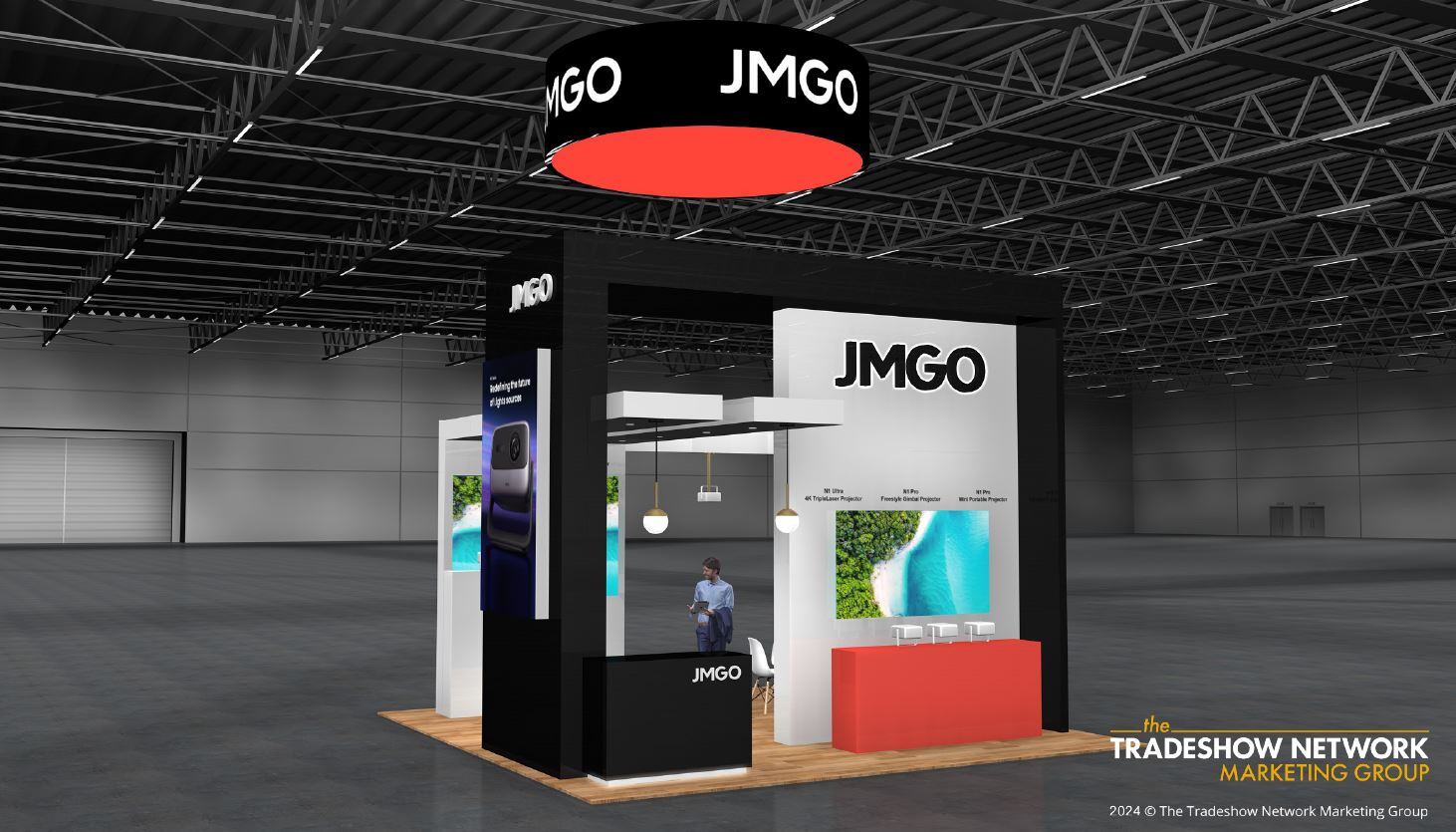
Start With the Boring WinsIsland Rental Booth design

The most valuable AI work happening in trade shows right now isn't flashy. It's administrative.

Sorting a lead list. Drafting the follow-up sequence your sales team never gets around to writing. Summarizing three days of booth conversations into something a regional manager can actually read. Pulling last year's show metrics into a format that makes the case for next year's budget.

None of that ends up in a case study. All of it gives your team hours back during the busiest week of their year. If you're looking for a place to start, start there — not with the robot in the booth.

Lead Capture That Sorts Itself

Every exhibitor we work with has some version of the same problem: you leave the show with 400 scans and no idea which forty matter.

AI-assisted lead scoring helps close that gap. Based on what someone engaged with, how long they stayed, what they asked about, and how they match your existing customer profile, you get a ranked list instead of a pile. Your reps call the right people on Monday instead of working alphabetically through a spreadsheet in week three.

That's the real return. Not more leads — faster clarity on which leads deserve a phone call while the conversation is still fresh in the prospect's mind.

Chatbots and Kiosks, Used Honestly

An AI assistant on a touchscreen can handle the questions that eat your staff alive: Where's the restroom? Do you have a spec sheet on this model? Can I get a meeting Thursday? Do you have anything in Spanish?

Answer those automatically and your people are freed up for the conversations that actually require a person. That's the right division of labor.

What we'd caution against is letting the technology stand between a visitor and your team. Nobody walks a show floor hoping to talk to a screen. The booths that win are the ones where the tech clears a path to a human being, not the ones where it replaces one.

Better Planning Before You Ever Ship a Crate

This is where AI quietly earns its keep for exhibit managers.

Feed a few years of show history into the right tools and you can get real guidance on staffing levels by day and hour, which product displays drew traffic and which sat idle, what your realistic booth traffic looks like at a given show, and where your promotional spend actually moved the needle.

We've long told clients that the decisions that determine a show's success get made months before the truck leaves. Better forecasting makes those months less of a guessing game.

Now, the Part Nobody Warns You About

Here's the conversation we're having more and more often, and it's the reason we wanted to write this.

A client comes in with an AI-generated rendering. It's stunning. Two-story structure, floating LED halo, hanging sign that looks like it was engineered by NASA, custom millwork, a cantilevered second-level lounge, seamless curved video wall. They love it. They're attached to it. They've already shown it to their VP.

And it's a $400,000 exhibit. Their budget is $75,000.

This is the single biggest risk we see with AI in exhibit design right now. These tools are not constrained by anything. They don't know what steel weighs. They don't know your drayage rates, your hall's rigging rules, your ceiling height, your I&D labor costs, or the fact that the shape they just drew can't be broken down, crated, and shipped without a custom mold. They generate a beautiful picture. They don't generate a budget, an engineering plan, or a show-floor reality check.

So use these tools — we mean that. They're genuinely useful for exploring a direction, communicating a mood, and getting your internal stakeholders aligned on a look faster than any mood board ever could. Just go in with your expectations set:

Bring us the concept before you fall in love with it. We'd much rather look at your rendering early and tell you what's buildable at your number than have you spend two months attached to something out of reach.

Know your number first. A rendering is not a design and it's certainly not an estimate. What you spend is driven by materials, engineering, weight, rigging, shipping, storage, and labor — none of which the image knows about.

Expect to value-engineer. Almost always, the feeling of that concept is achievable within budget. The specific execution usually isn't. Our job is to find what's actually doing the work in that image — the sightline, the scale, the lighting, the one bold gesture — and deliver it in a way that ships, installs, and comes home in one piece.

Remember the exhibit has to live past one show. Reconfigurability, storage footprint, refurbishment, drayage weight. A concept generated for a single hero image doesn't account for the next four shows on your calendar.

We're not trying to talk anyone out of ambition. We're trying to keep the ambition pointed at something we can actually build.

The Legitimate Concerns

Before you roll anything out, a few things worth sorting internally:

    • Privacy and data compliance. Anything involving facial recognition or attendee tracking needs a legal review, not just an IT one. Rules vary by venue and by country.
    • Data quality. AI insights are only as good as the CRM behind them. Messy inputs, confident nonsense out.
    • Transparency. If a recommendation came from a system, be able to explain it.
    • Staff training. Tools nobody knows how to use on show day are just expensive props.

Where This Is Going

Expect real-time content adaptation, digital twins for pre-show layout planning, and AR product demos that let you put a machine on the floor without freighting one. Some of it will matter. Some of it will be a line item you regret.

Our advice hasn't changed in thirty-plus years of building exhibits: pick the technology that solves a problem you actually have. The rest is decoration.

The Bottom Line

AI is a very good assistant and a very poor decision-maker. It will help you follow up faster, plan smarter, staff better, and communicate your ideas more clearly than you could before. What it won't do is tell you what your exhibit costs, whether it can be built, or whether it's the right investment for your program.

That part still takes a conversation.


Thinking about your next show? Bring us your ideas — renderings, sketches, Pinterest boards, AI concepts, whatever you've got. We'll tell you straight what's achievable at your budget and design something that works on the floor, not just on the screen. Contact The Tradeshow Network to start the conversation.

CatalogMockup

LOOKING FOR SOME EXHIBIT DESIGN IDEAS?

Download one of our Resource Guide Catalogs!

Our custom, modular, portable, and rental exhibits catalogs are a great resource for trade show information as well as exhibit designs.

Download A Catalog
Comments

We promise that we won't SPAM you.