From Booth Stop to Booked Deal: The Trade Show Selling Playbook for Every Industry

Calendar Icon

July 23, 2026

Winning business on the show floor isn't about the biggest booth or the loudest pitch. It's about what happens in the ninety seconds after someone walks up — whether your team, your graphics, and your message actually earn a second minute of their attention. That challenge looks different depending on the show. A packed aisle at HIMSS is not the same selling environment as a hardware demo at CES or a factory-floor walkthrough at IMTS, but the fundamentals of turning a booth visit into a real business conversation stay the same no matter the industry.

As a Chicago-based exhibit house that also handles the marketing side — booth graphics, messaging, brochures, and sales collateral — we spend as much time thinking about what happens at the booth as we do building it. Here's how we help clients get more out of every conversation, whatever show they're standing in.

Know who you're talking to before you pitch

Not every visitor who stops at your booth is the person who signs the check. Some are researchers, some are vendors sizing up competitors, some are simply killing time between sessions. The first job of any booth staffer is figuring out, quickly and politely, who they're actually talking to — their role, their organization, and whether they're even in the right region or market segment for what you sell.

A glance at a badge, a quick question, or a scanned business card usually answers that in under a minute. Getting this right early means your team spends its energy on the conversations that can actually turn into business, instead of running a full pitch on someone who was never going to buy.

Ask before you pitchtrade show selling tips

The instinct at a trade show is to launch straight into the product story. The better move is to ask a question first — what brought them to the show, what they're hoping to solve, what caught their eye about your stand. A few reliable openers:

  • What are you hoping to walk away with from this show?
  • What made you stop at our booth specifically?
  • What's the biggest challenge you're dealing with right now in this space?
  • Would you mind giving us your take on [a sample, a demo, a new product]?
  • A private meeting space near the floor for deeper conversations, pricing discussions, and next steps
  • A specific, low-pressure next step offered on the spot — a private consultation, a personalized demo, a follow-up call already on the calendar
  • Leads captured with enough context (not just a scanned badge) that your team can pick the conversation back up where it left off
  • Sales collateral and brochures that leave something substantive behind, so the prospect has more than a memory to bring back to their team

This does two things. It keeps your team from sounding like a script, and it tells you within thirty seconds whether this is a real conversation worth having. Good booth graphics and clear messaging do a lot of this qualifying work before your staff even opens their mouth — a well-designed stand should already be answering "what does this company do and why should I care" at a glance, so the conversation can start one step further in.

Make the connection, not just the pitch

The exhibits that convert aren't the ones with the most polished script — they're the ones staffed by people who know how to build a real connection in a short window. That means choosing booth staff deliberately: your strongest sales and technical people, trained specifically for the trade show environment, not just pulled from the office for the week.

A trade show conversation is the opening move in a longer relationship, not a closing pitch. The goal at each stage is simple: make the next few minutes interesting enough that the prospect wants to keep talking. If your objective is booking a follow-up meeting or a private demo, map out that path in advance and rehearse it, so there's no fumbling when the moment actually comes.

Long sales cycles need a plan beyond the show floor

In industries like healthcare, medical technology, and industrial manufacturing, closing on the spot is rarely realistic — the sales cycle is long, the stakes are high, and the buying decision often involves several people who aren't standing at your booth. That doesn't mean the show was wasted. It means the follow-through matters as much as the conversation itself.

A few things that make follow-up actually work:

Nobody responds well to being pushed toward a decision they're not ready for. Letting a prospect know you'll be available when they are — and following through with material that actually helps them make the case internally — tends to close more business than any high-pressure close ever will.

Different shows, different playbooks

The exhibit strategy and messaging that works varies significantly by industry, and we tailor both design and sales approach accordingly:

Healthcare and medical technology — RSNA, HIMSS

Regulatory sensitivity limits what you can hand out or promise on the floor, so the booth design and printed materials have to carry more of the weight. Clear, credible messaging and clinically accurate graphics matter more here than flashy giveaways.

Technology — CES

Attention spans are short and the competition is loud. Booths need to communicate the core value proposition in seconds, with staff trained to demo fast and qualify faster in one of the most crowded show floors in the world.

Manufacturing and industrial — PACK EXPO, IMTS

Buyers here are often technical and deliberate, evaluating equipment and systems that represent a major capital decision. Detailed spec sheets, clear process graphics, and staff who can speak the engineering language tend to outperform a purely visual pitch.

Where we fit in

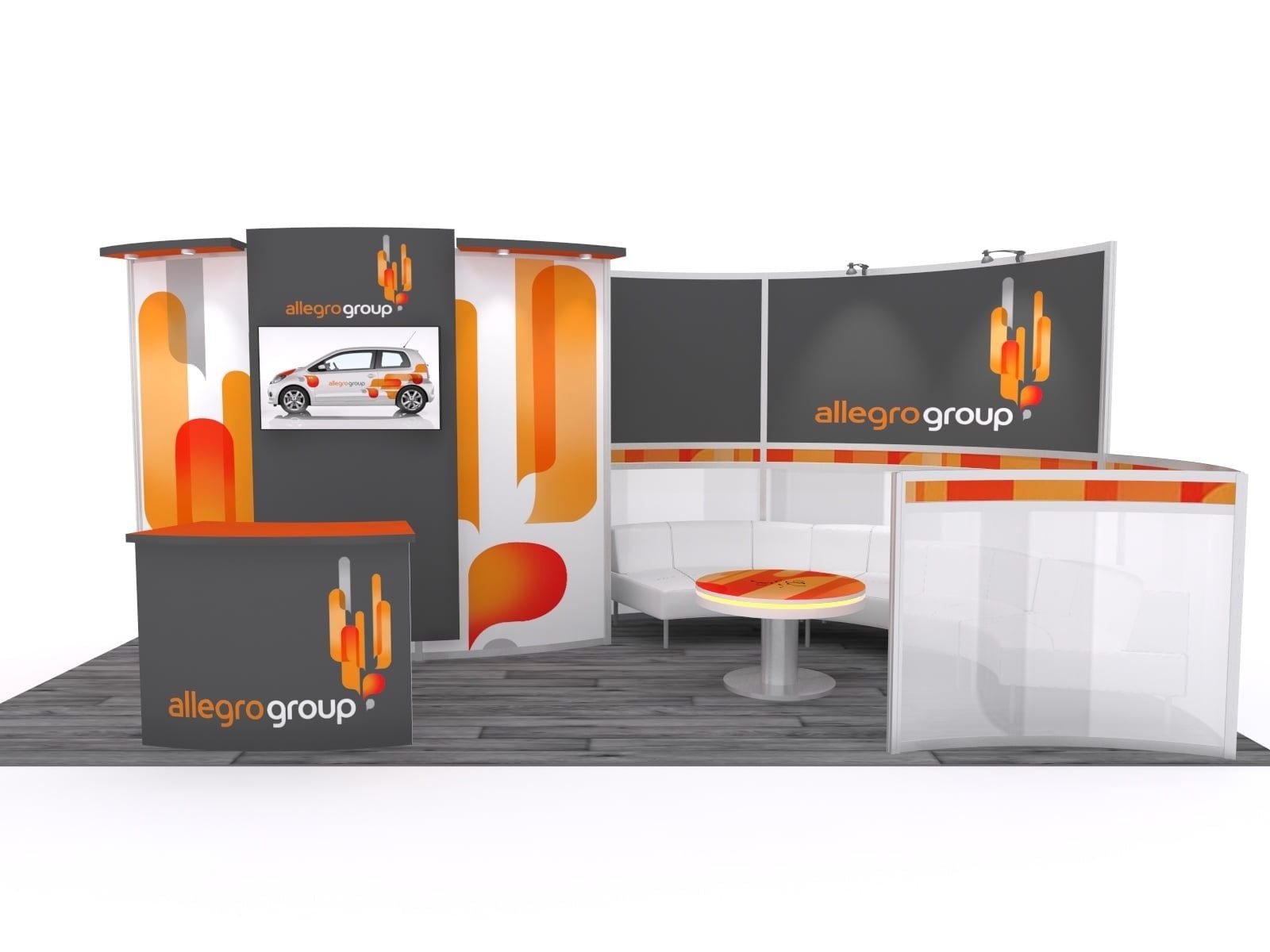
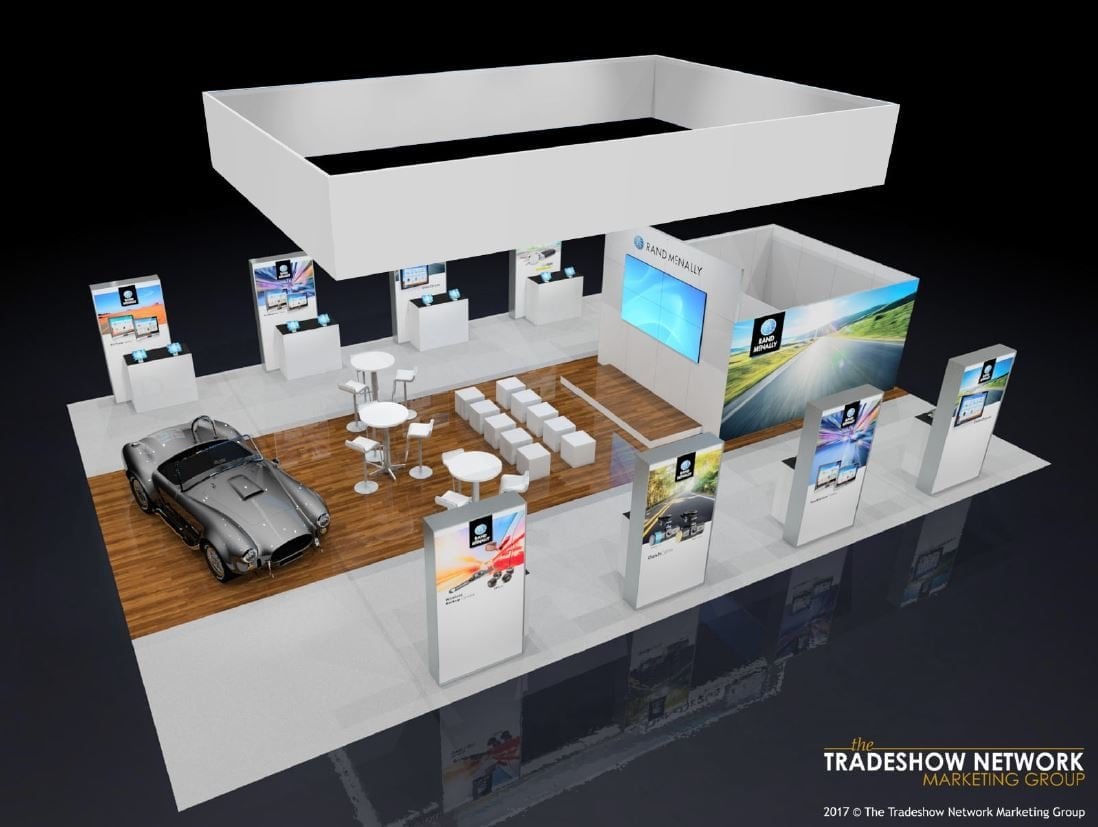
Booth design gets a prospect to stop. What happens next — the conversation, the materials they walk away with, the follow-up they receive — is what actually turns that stop into a sale. The Tradeshow Network works with clients on both ends: custom exhibit design and rental booths built for the specific show and audience, plus the marketing expertise to back it up — messaging, booth graphics, brochures, and sales collateral built to support your team's conversations on the floor, not just look good in photos.

Based in Chicago and working with exhibitors across healthcare, technology, and manufacturing, we help clients walk into any show — big or niche, local or national — with a stand and a story built to convert.

New call-to-action

CatalogMockup

LOOKING FOR SOME EXHIBIT DESIGN IDEAS?

Download one of our Resource Guide Catalogs!

Our custom, modular, portable, and rental exhibits catalogs are a great resource for trade show information as well as exhibit designs.

Download A Catalog
Comments

We promise that we won't SPAM you.