The Complete Guide to Rental Exhibit Cost Planning
 Karin Roberts : Tue, Sep 22, 2026
Plan your rental exhibit budget with confidence. This guide covers cost categories, hidden fees, drayage, and contingency strategies.
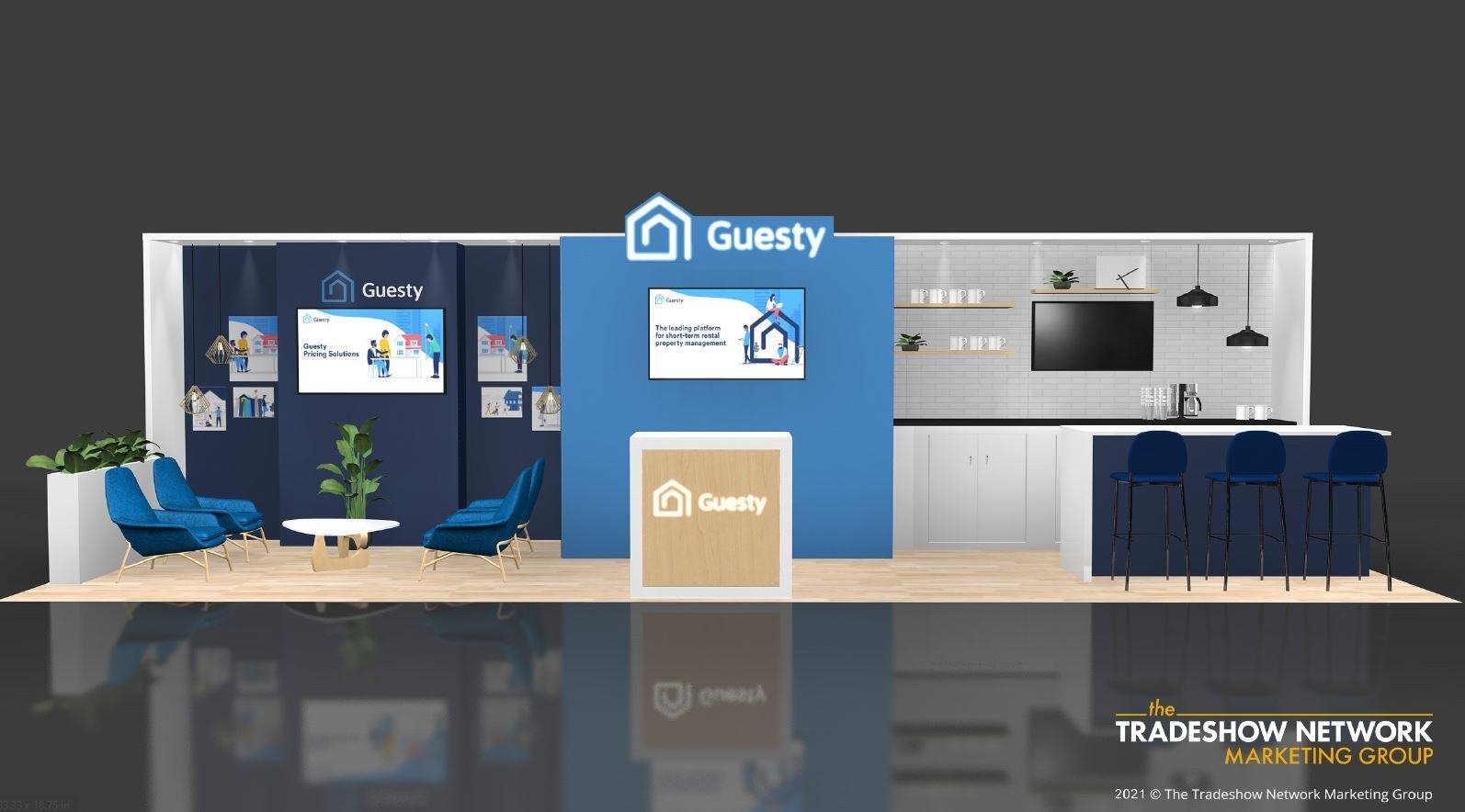
Trade shows are built to be temporary — but too many exhibits are built like they’re permanent construction. Traditional, “built-from-scratch” booths often rely on lumber, plywood, fasteners, laminates, and adhesives that are difficult to reuse and expensive to dispose of. When a booth is used once (or a handful of times) and then scrapped, the environmental impact lives on for decades… or longer.
Rental exhibits flip that equation. They’re designed for repeat use, reconfiguration, and minimal material replacement — which makes them one of the most practical sustainability upgrades an exhibitor can make and they are totally customizable - so what are you waiting for?
A traditional custom exhibit is often framed and skinned like scenery or a small wall system — commonly with wood framing and sheet goods (plywood/MDF) plus laminates, paint, and adhesive.
A simple 20×20 example (illustrative, not one-size-fits-all):Imagine a 20×20 booth with: a 20' back wall at 10' tall = 200 sq ft or two 10' returns at 10' tall = 200 sq ft
That’s ~400 sq ft of wall surface before we even count closets, soffits, arches, counters, header signs, or double-sided walls.
A standard 4×8 sheet covers 32 sq ft, so 400 sq ft of surface alone can require ~13 sheets (and often more, due to double-siding, cut waste, and structural needs).
Now add the lumber framing behind those panels, plus flooring/subfloor, crates, and bracing — and the material adds up fast.
Wood feels eco-friendly because it’s natural. But landfill conditions are typically oxygen-poor, which changes how organic materials break down. In oxygen-free environments like landfills, decomposition produces methane, a powerful greenhouse gas.
And outside of landfills, wood still doesn’t “disappear overnight.” In natural settings, large wood can take decades to over a century to fully decompose depending on conditions.
Even when traditional booths use metal components, the issue is often single-use design (custom fabrication that doesn’t reconfigure well) and disposal practices (not recovered, not recycled, or damaged during teardown).
For context on persistence:
Many plastics require 100–400 years to break down in a landfill.
Aluminum items (like cans) are often cited as taking ~200–250 years to break down when landfilled.
Environmental agencies also emphasize that many human-made products can take hundreds of years to degrade, depending heavily on conditions.
The takeaway: when you toss exhibit materials, you’re not “throwing it away.” You’re choosing what sits in a landfill for generations.
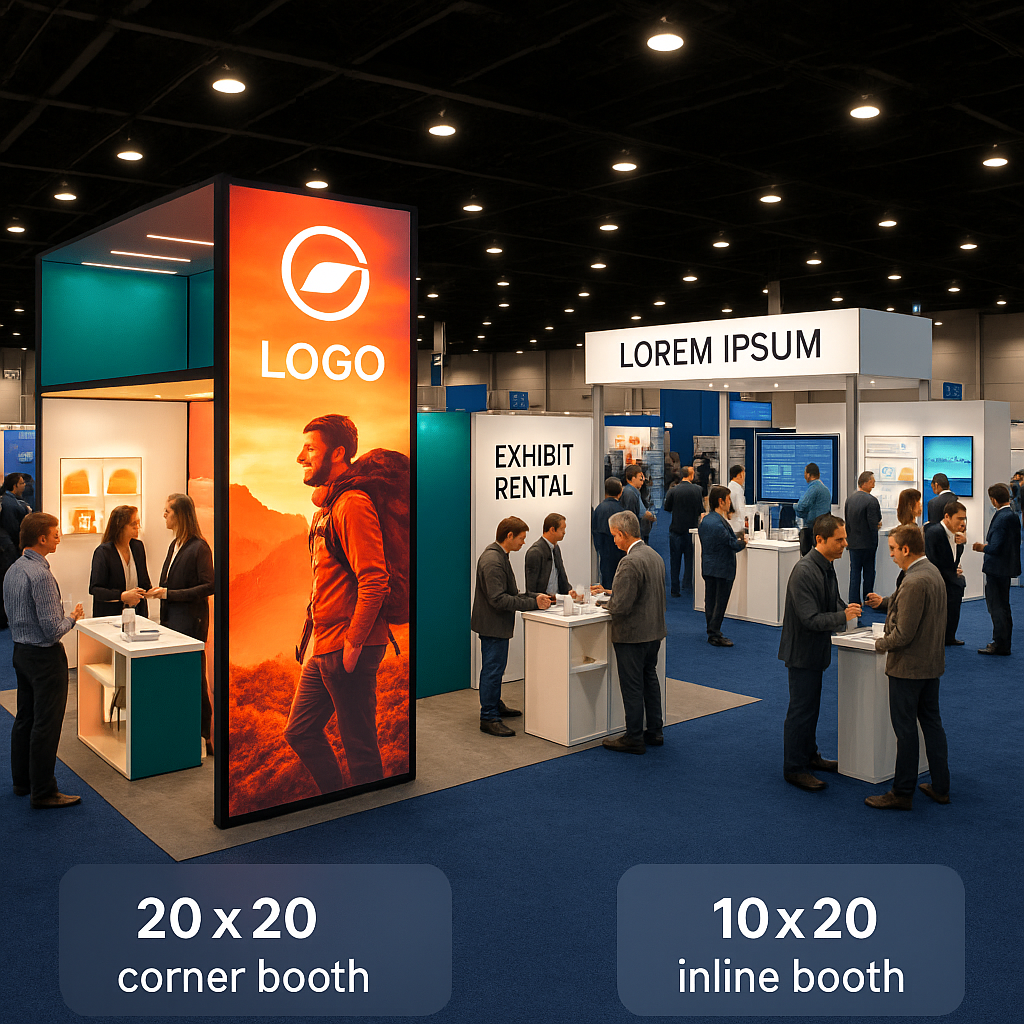
A 20×20 exhibit footprint is 400 square feet. Even if dismantled, many booths include bulky wall panels, counters, platforms, and crates that don’t compact cleanly.
To picture scale: 400 sq ft is about the size of a small studio apartment living area. Now imagine that space filled with materials that can’t be easily reused — and multiplied by thousands of exhibitors across a season.
Rental booths reduce waste because they’re built on a different philosophy: reuse the structure, refresh only what you need.
Modern rental systems are designed around durable, modular frames (often aluminum) that are:
assembled and disassembled repeatedly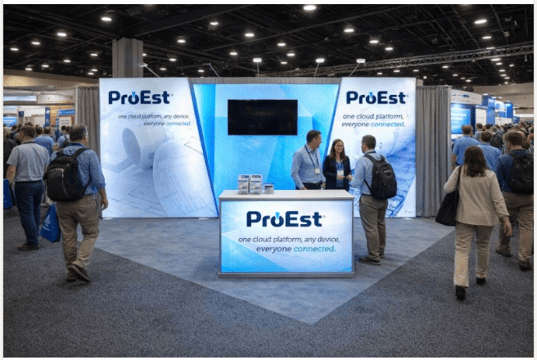
reconfigured into new layouts
refreshed with updated branding
Instead of building walls from scratch every time, you’re using a proven structure and updating graphics, not construction. The same core frame can appear as a sleek product theater at one show, a demo-driven solutions hub at the next, and a brand storytelling environment after that — all by changing out fabric skins, messaging, and a few key branded elements. You still get a “new booth” look for each event, but behind the scenes you’re reusing a smart, modular system rather than burning budget and materials on single-use builds.
When you pair reusable frames with fabric graphic panels (like SEG-style or similar fabric skins), you dramatically reduce:
rigid sheet goods (plywood/MDF)
laminates and adhesives
paint and finishing waste
“one-and-done” scenic construction
Even better: if your campaign changes, you can replace a limited set of panels — not rebuild the booth. Swap out a few fabric graphics to launch a new product line, test a different value proposition, or localize messaging for a specific show, while the main structure, lighting, and AV stay exactly the same. That keeps your footprint and costs low, your look fresh, and your team focused on strategy instead of starting from square one every season.
Traditional booths often get scrapped when:
storage costs add up
shipping crates get damaged
updates require structural rebuilds
timelines push teams to “trash it and start over”
Rental exhibits avoid that decision point entirely. Instead of a one-and-done build that you feel guilty about trashing, the structure stays in circulation, working show after show for different exhibitors and configurations. Your team refreshes what actually needs to change — the graphics, messaging, and a few branded elements — while the core hardware continues to earn its keep. That means your brand gets the impact, the presence, and the flexibility it needs without turning your booth into landfill volume or tying up budget in something you’ll only use a few times.
Environmental wins often come with operational wins:
fewer materials to ship
fewer “construction-style” components
faster install/dismantle (less labor, fewer surprises)
fewer disposal fees and drayage headaches tied to heavy builds
If you want to reduce your trade show footprint without compromising impact, rental exhibits are one of the most direct moves you can make:
Less new material
More reuse
Fewer landfill-bound components
At The Tradeshow Network, we help brands take advantage of rental exhibit systems that look custom, perform like premium builds, and dramatically cut down on waste — by reusing existing frames and adding only the fabric panels and graphics needed to make your booth feel brand-new.
If you’re exhibiting in a 10×20, 20×20, or larger island space, we can design a rental solution that fits your footprint, your goals, and your sustainability priorities — without building a booth you’ll regret throwing away later.
.png) Karin Roberts : Tue, Sep 22, 2026
Karin Roberts : Tue, Sep 22, 2026
Plan your rental exhibit budget with confidence. This guide covers cost categories, hidden fees, drayage, and contingency strategies.
 Karin Roberts : Tue, Sep 30, 2025
A Cost-effective way to exhibit with prepackaged rental booths. From 10×20 inline to 20×20 rental booths and large island designs, The Tradeshow...
 Karin Roberts : Tue, Jun 30, 2026
Discover the advantages of trade show booth rentals, from cost savings to design flexibility, and learn how to choose the right partner for your...