If you have ever opened a trade show invoice and found charges you never expected, you are not alone. Rental exhibit budgeting is one of the most misunderstood areas in event marketing, and a single overlooked line item can throw off your entire program budget.

This guide breaks down every cost category you need to plan for when renting a trade show exhibit. You will learn how to build a realistic budget, anticipate pricing variables, and protect your bottom line from show-day surprises.

TTNMG helps exhibitors plan and execute rental booth programs that maximize visibility without breaking the budget. The strategies below come from decades of managing hundreds of shows each year.

Key Takeaways: The Complete Guide to Rental Exhibit Cost Planning

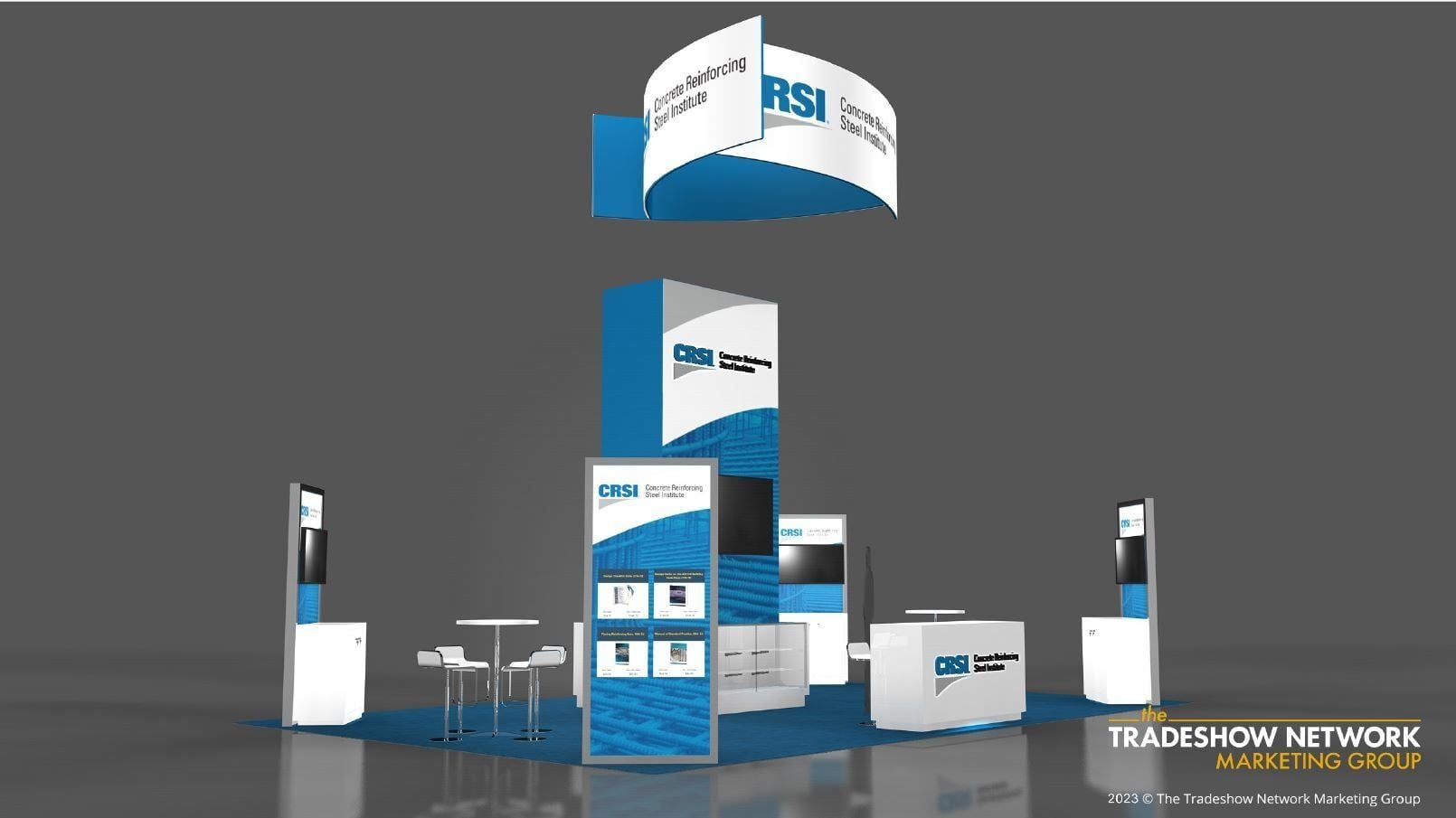
  • Rental exhibit costs extend far beyond the booth structure itself into logistics, labor, and venue fees.20x20 rental exhibit booth
  • Material handling rates have climbed over 21% since 2022, making early planning essential for budget accuracy.
  • Geographic location dramatically impacts total exhibit spend, with city-to-city cost differences reaching 75%.
  • TTNMG offers turnkey rental solutions that bundle design, logistics, and installation into a single predictable cost.
  • Building a 10-15% contingency fund into your exhibit budget protects you from last-minute overages.

Why Rental Exhibit Budgets Are Difficult to Predict

Rental exhibit budgets are notoriously hard to pin down because they involve multiple vendors, variable pricing, and venue-specific rules that change from show to show. Unlike a fixed purchase price, a rental quote can shift based on timeline, configuration, and service add-ons.

The challenge gets worse when you factor in third-party costs that sit outside your exhibit house agreement. Drayage, electrical, internet, and labor are all priced by the venue or its appointed general contractor, and those rates are rarely visible until you receive the exhibitor manual weeks before the show.

According to The Exhibitor Advocate's 2025 Annual Survey of Exhibition Rates, 80% of exhibitors now cite cost management as their top challenge. The same study found that material handling base rates rose 9.5% in a single year, bringing the four-year increase to 21.3%.

The Core Cost Categories in a Rental Exhibit Budget

Every rental exhibit budget can be broken into five core categories. Understanding each one helps you create a more accurate forecast and avoid the "where did that charge come from?" moment after the show.

Booth Structure and Graphics

This is the most visible cost and usually the starting point for your budget. It includes the physical exhibit structure, branded graphics, shelving, counters, and any custom elements.

For a 10x20 inline rental, you can expect the structure and graphics to represent about 40-50% of your total show investment. Larger island configurations (20x20 or 30x30) scale that percentage down because service costs like labor and drayage grow proportionally less.

Logistics and Shipping

Getting your exhibit to and from the show is a cost that catches many first-time renters off guard. Shipping involves crating, freight, advance warehouse delivery or direct-to-show delivery, and return shipping after the event.

Geography matters here. Shipping a rental booth from a Midwest warehouse to a Las Vegas show costs significantly less than shipping coast to coast. TTNMG's warehouse in Saint Charles, Illinois gives clients central U.S. access that reduces freight costs to most major convention cities.

Installation and Dismantle Labor

Installation and dismantle (I&D) labor is billed by the hour, and rates vary wildly depending on the city, the union jurisdiction, and whether the work happens during straight time or overtime. The Exhibitor Advocate survey found that installation labor has risen between 12.7% and 16.7% since 2022 across all time categories.

Overtime and weekend rates can double or triple your labor bill. If your booth arrives late and requires after-hours setup, that single scheduling mistake can add thousands to your invoice.

Venue and Show Services

This category includes electrical hookups, internet access, booth flooring (carpet, padding, visqueen covering), furniture rentals, and cleaning services. These are ordered through the show's official contractor and are often the least predictable portion of your budget.

Electrical outlet rates alone surged 18.4% in 2025, making this one of the fastest-growing cost categories for exhibitors. Booth flooring has followed a similar trajectory, with carpet costs rising 12.7% and padding climbing 21% in the same period.

Drayage and Material Handling

Drayage is the cost of moving your exhibit from the loading dock to your booth space and back again. It is charged by weight (per hundred pounds or "CWT"), and the average rate has climbed to approximately $2.28 per pound as of the latest industry data.

This means a rental exhibit crated at 3,000 pounds could incur over $6,800 just in material handling fees. Lighter, modular rental systems can significantly reduce this cost, which is one reason why fabric and tension-based rentals have grown in popularity.

How Geographic Location Impacts Your Rental Exhibit Budget

Where you exhibit matters almost as much as what you exhibit. The Exhibitor Advocate's basket-of-goods analysis shows that exhibiting in New York costs approximately 75% more than exhibiting in Atlanta for the same booth configuration and services.

Cities like New York, San Francisco, and Chicago carry higher labor rates, stricter union rules, and elevated venue surcharges. Meanwhile, cities like Atlanta, Dallas, and Orlando offer more competitive pricing across nearly every service category.

When you plan your annual trade show calendar, mapping the total cost of participation by city helps you decide where to invest your heaviest resources and where a smaller, more portable presence makes strategic sense.

Hidden Costs That Surprise Even Experienced Exhibitors

Even seasoned trade show professionals get surprised by costs that were not part of the original plan. Here are the most common culprits.

Late-Order Surcharges

Most show service contractors offer "advance rates" for orders placed weeks before the event. If you miss that deadline, you pay "floor rates" that can be 30-50% higher for the same exact service.

Forced Labor Minimums

Some venues require a minimum number of labor hours regardless of your booth's actual installation time. A 10x20 inline that takes 90 minutes to set up may still be billed at a four-hour minimum.

Graphics Revisions and Rush Fees

Changing your booth graphics after production has started often triggers rush fees or reprint charges. Finalizing your messaging and artwork early is one of the simplest ways to stay on budget.

Show Floor Damage and Cleaning Penalties

Venues may charge cleaning or repair fees if your booth leaves marks, debris, or adhesive residue on the floor. Using exhibit-approved flooring and adhesives avoids this entirely.

How to Build a Realistic Rental Exhibit Budget: Step by Step

Follow these steps to create a budget that reflects actual costs rather than optimistic estimates.

Step 1: Define Your Booth Size and Configuration

Start with the floor plan. Are you renting a 10x20 inline, a 20x20 island, or something larger? The booth size dictates nearly every other cost in your budget, from graphics square footage to labor hours to drayage weight.

Step 2: Request an All-Inclusive Quote from Your Exhibit Partner

Ask your exhibit house for a detailed quote that separates structure, graphics, shipping, installation, and dismantle into individual line items. A bundled "rental fee" without itemization makes it impossible to identify where your money is going.

TTNMG's turnkey rental solutions include design, structure, graphics, shipping, I&D supervision, and storage in a single proposal, giving you full visibility into every cost component.

Step 3: Pull the Exhibitor Manual Early

Request the exhibitor service manual as soon as your booth space is confirmed. This document lists every venue-specific rate for electrical, internet, flooring, drayage, and labor. Use these published rates to build your venue services line items.

Step 4: Calculate Drayage Based on Actual Crate Weight

Ask your exhibit partner for the actual crate weight of your rental booth. Multiply that weight by the venue's published drayage rate (per hundred pounds). Do not estimate. Get the real number.

Step 5: Account for Labor Timing

Determine when your booth will be installed. If setup falls on a weekend, holiday, or after-hours window, you will pay overtime or double-time rates. Whenever possible, schedule installation during straight-time hours to save significantly on labor costs.

Step 6: Add a 10-15% Contingency

No matter how carefully you plan, unplanned costs will appear. A missed advance-order deadline, a last-minute graphic change, or an unexpected electrical need can all push your budget over. A 10-15% contingency fund absorbs these without triggering panic.

Rental Exhibits vs. Custom Purchases: A Budget Perspective

One of the most common budget decisions exhibitors face is whether to rent or buy. Here is how the financial equation breaks down.

When Renting Saves You Money

Renting makes financial sense when you exhibit at fewer than four shows per year, when your booth configuration changes between events, or when you want to test a larger footprint before committing to ownership. You avoid the upfront capital investment, ongoing storage fees, and depreciation of a custom build.

When Owning Makes Financial Sense

Purchasing a custom exhibit becomes more cost-effective when you attend five or more shows annually with the same configuration. After the third or fourth use, the per-show cost of a custom build typically drops below the per-show rental rate.

The Hybrid Approach

Many exhibitors combine both strategies. They own a core structure and rent supplemental elements (LED walls, hanging signs, extra demo stations) to adapt for different show sizes. TTNMG specializes in creating custom rental configurations that look and perform like fully owned booths, giving you the flexibility of a rental with the branded impact of a custom build.

How to Reduce Rental Exhibit Costs Without Sacrificing Impact

Cutting costs does not have to mean cutting corners. Here are proven strategies that experienced exhibit managers use to reduce spend while maintaining booth performance.

Choose Lightweight Materials

Fabric and tension systems weigh a fraction of traditional hard-wall exhibits. Less weight means lower shipping fees and dramatically lower drayage charges. A fabric booth that crates at 1,500 pounds instead of 3,000 pounds could save you over $3,000 in material handling alone.

Consolidate Your Vendor Relationships

Working with a single full-service exhibit house reduces coordination overhead and often delivers volume-based pricing advantages. When one partner handles design, production, logistics, installation, and storage, there are fewer handoffs where costs get marked up.

Book Services at Advance Rates

Order electrical, internet, and flooring at the advance-rate deadline, not the day before the show. This single habit can save 30-50% on venue services across your annual show calendar.

Reuse Graphics Across Multiple Shows

Design your graphics with modular messaging panels that allow you to swap key messages without reprinting the entire set. This approach lets you keep your brand fresh while reusing the most expensive visual elements across several events.

Ship Direct to Show When Possible

Advance warehouse delivery adds a separate handling fee on top of standard drayage. If your timeline allows, shipping directly to the show venue during the designated move-in window can eliminate that extra charge.

Building a Multi-Show Annual Budget for Rental Exhibits

If you participate in more than one trade show per year, a single-show budget is not enough. You need an annual view that accounts for variation between events.

Map Every Show by City and Venue

List each event, its city, venue, and your target booth size. Research the published service rates for each venue. This gives you a city-adjusted cost estimate for every show on your calendar.

Identify Shared Costs and Show-Specific Costs

Some costs repeat regardless of venue: booth rental fees, graphic production, and account management. Other costs fluctuate by location: drayage rates, labor pricing, and electrical surcharges. Separating these two categories gives you a more accurate annual forecast.

Negotiate Volume Commitments with Your Exhibit Partner

When you commit to multiple shows with the same exhibit house, you gain negotiating power. Ask about annual rental programs that lock in per-show pricing and include services like storage, maintenance, and graphic updates at a bundled rate.

The Tradeshow Network offers account management and online inventory tools that let you track budgets, review invoices, and manage your exhibit assets in real time across your full show schedule.

Common Budgeting Mistakes and How to Avoid Them

Here are the most frequent errors exhibitors make when planning their rental exhibit budgets, along with practical fixes.

Underestimating Drayage

Many exhibitors budget a flat guess for material handling rather than calculating it from actual crate weights. Always request certified weights from your exhibit partner and multiply by the venue's published rate.

Ignoring Labor Overtime Rules

If setup extends beyond regular hours or into the weekend, labor costs can multiply. Plan your move-in schedule around straight-time windows and confirm the exact cutoff with the general contractor.

Forgetting Return Shipping

The booth has to go home. Return freight after a show often costs the same as outbound shipping, yet it frequently gets left out of the original budget estimate.

Skipping the Exhibitor Manual Review

The exhibitor service manual is your pricing bible for venue-specific costs. Skipping it means budgeting in the dark. Read it cover to cover as soon as it becomes available, and flag every service your booth will need.

How TTNMG Helps You Plan and Control Rental Exhibit Costs

Exhibit budgeting becomes simpler when you partner with an exhibit house that builds cost transparency into its process from day one.

TTNMG assigns a dedicated account manager to every rental client. That person walks you through each line item in your proposal, flags potential add-on costs before they happen, and coordinates with venue contractors on your behalf so nothing slips through the cracks.

The company's online management tools let you track show budgets, review asset inventories, and monitor invoices in real time. This level of visibility means you always know exactly where your money is going before, during, and after each event.

With a warehouse in Saint Charles, Illinois and a team that manages hundreds of shows annually, TTNMG keeps freight routes optimized and labor scheduling tight, two of the biggest levers for controlling total exhibit cost.

In Conclusion: How to Keep Your Rental Exhibit Budget on Track

Rental exhibit budgeting does not have to be a guessing game. When you understand the five core cost categories, anticipate venue-specific variables, and build contingency into your plan, you take control of your trade show investment instead of reacting to surprises.

Start by requesting detailed, itemized quotes from your exhibit partner. Pull the exhibitor manual early. Calculate drayage from real weights. Schedule installation during straight-time hours. And always keep a 10-15% buffer in reserve.

The exhibitors who succeed financially at trade shows are not the ones who spend the least. They are the ones who plan the best.

FAQs About Rental Exhibit Cost Planning

What is typically included in a rental exhibit quote?

A rental exhibit quote usually includes the booth structure, branded graphics, and basic configuration. Some exhibit houses like TTNMG bundle shipping, installation, and dismantle into a single turnkey price. Always ask for an itemized breakdown so you can see each cost component clearly.

How much should I budget for drayage at a trade show?

Drayage costs depend on your exhibit's crate weight and the venue's per-pound rate. As a baseline, average material handling rates sit around $2.28 per pound nationally. Multiply your total crate weight by the published rate to get an accurate estimate.

Why do trade show costs vary so much by city?

Labor rates, union rules, venue surcharges, and contractor pricing all differ by location. Industry data shows that exhibiting in high-cost cities can run 75% more than exhibiting in lower-cost markets for identical booth setups and services.

How can I reduce my rental exhibit costs without losing quality?

Choose lightweight materials like fabric and tension systems to cut shipping and drayage. Book venue services at advance-rate deadlines. Work with a full-service partner like TTNMG to consolidate vendors and reduce markup across the supply chain.

What is a good contingency percentage for an exhibit budget?

A 10-15% contingency covers most unexpected costs, from rush graphics fees to last-minute electrical needs. TTNMG recommends building this buffer into every show budget so you can absorb surprises without pulling funds from other marketing programs.

When does buying an exhibit make more sense than renting?

Purchasing typically becomes more cost-effective when you attend five or more shows per year using the same booth configuration. Below that threshold, renting usually delivers a lower per-show cost and greater design flexibility between events.

From Booth to Boom: How Smart Exhibitors Maximize Trade Show Impact with Custom Rental Designs

1 min read

From Booth to Boom: How Smart Exhibitors Maximize Trade Show Impact with Custom Rental Designs

There are few places where thousands of people gather with one purpose: discovering new ideas, brands, and products. Trade shows remain one of the...
Read More
Custom Island Exhibits & Peninsula Booth Designs | 10X20, 20x20+ Trade Show Booths

1 min read

Custom Island Exhibits & Peninsula Booth Designs | 10X20, 20x20+ Trade Show Booths

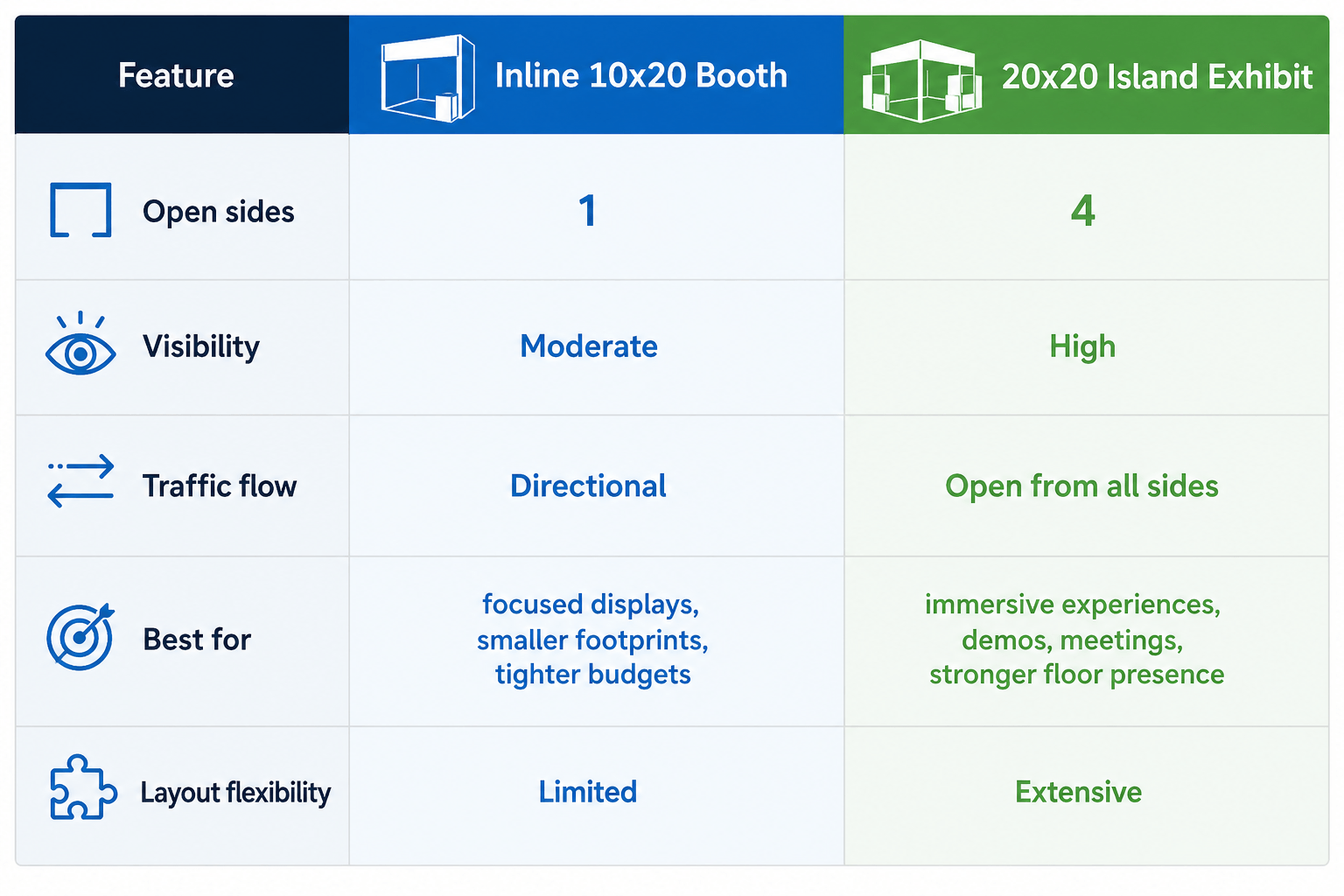
When your event strategy moves beyond a standard inline 10x20 booth into a 20x20 island exhibit or peninsula layout, your exhibit needs to do more...

Read More
Achieve a Professional Edge with a 20x20 Trade Show Rental Exhibit

1 min read

Achieve a Professional Edge with a 20x20 Trade Show Rental Exhibit

A 20x20 rental exhibit not only gives your business a commanding footprint on the show floor but also provides the versatility to create immersive...

Read More