Key considerations before committing to a trade show
 Karin Roberts : Tue, Nov 18, 2025
Maximize your trade show success by defining objectives, understanding your audience, and setting measurable goals. Get strategic insights to ensure...
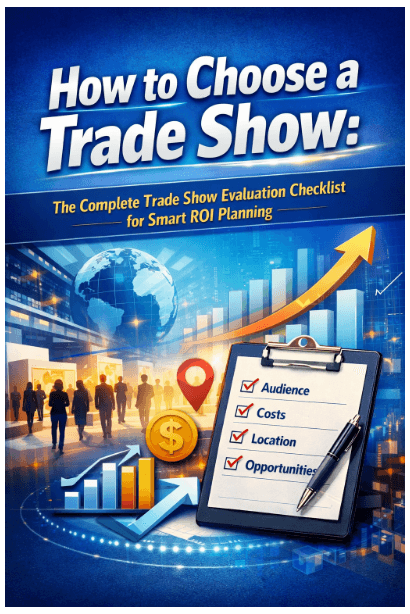
Choosing the right event is one of the most important strategic decisions your marketing team will make all year. The trade shows you select influence not only your budget, but also your pipeline, brand positioning, and competitive visibility for the next 12–18 months. Exhibiting requires significant investment — booth space, exhibit design, travel, labor, promotions, and staffing — plus the time and attention of your sales and marketing teams. A single misaligned event can drain resources that could have fueled more profitable opportunities elsewhere.
That’s why a structured Trade Show Evaluation Checklist and disciplined Trade Show ROI Planning are essential before signing a contract. Instead of relying on gut feel, sales anecdotes, or pressure from show organizers, you need a repeatable process for evaluating whether an event will actually deliver on your objectives. A checklist forces you to ask the right questions: Who will be there? How does the timing fit your sales cycle? What will it really cost? What results do you need to see to call it a success?
This guide walks you step-by-step through how to choose a trade show that aligns with your objectives, audience, and budget — while setting you up for measurable success. You’ll learn how to define clear goals, analyze attendee and competitor profiles, assess past show performance, and estimate true total investment so you can compare events side by side. By the end, you’ll be able to prioritize the right shows, avoid costly mistakes, and build a trade show program that consistently generates qualified opportunities and long-term ROI.
Every successful exhibit starts with clearly defined goals.
If you can’t measure it, you can’t manage it.
When deciding how to choose a trade show, audience quality outweighs sheer attendance numbers.
A smaller, highly qualified audience often delivers stronger ROI than a large but misaligned one.
A core step in any trade show evaluation checklist is assessing historical performance.
Established events typically offer more predictable outcomes, especially for first-time exhibitors.
Trade shows are competitive ecosystems.
If your competitors consistently invest in the event, there’s likely strategic value there.
Strong trade show ROI planning requires logistical clarity.
Location and operational factors directly impact both budget and team stress levels.
The booth is only part of your presence.
Maximizing visibility beyond the booth increases lead quality and brand positioning.
True trade show ROI planning looks beyond booth space fees.
Calculate:
Then ask:
Smart exhibitors control upfront costs while maintaining a premium presence — often through rental exhibits rather than large capital purchases.
Strong organizer support reduces risk.
Operational stability protects your investment.
Finally, zoom out.
Every event should serve a defined strategic purpose.
As you evaluate how to choose a trade show, partnering with the right exhibit house can dramatically influence your results.
At The Trade Show Network, we help exhibitors move beyond guesswork and into structured, strategic execution.
Because we are local to Chicago — serving major venues like McCormick Place and the Donald E. Stephens Convention Center — we understand:
More importantly, we specialize in rental exhibit solutions (10×20, 20×20, island exhibits, custom modular builds) that allow you to:
We don’t just build booths — we help you evaluate the event, design for measurable goals, and execute with precision.
The difference between a good show and a profitable show is preparation.
Use this Trade Show Evaluation Checklist before every commitment. Combine it with strong trade show ROI planning, and you’ll invest confidently — not emotionally.
If you’d like, I can next:
 Karin Roberts : Tue, Nov 18, 2025
Maximize your trade show success by defining objectives, understanding your audience, and setting measurable goals. Get strategic insights to ensure...
 Karin Roberts : Tue, May 23, 2023
Here is a checklist of things you must manage when planning all the items associated with your booth at a trade show event.
 Karin Roberts : Thu, May 01, 2025
By taking a strategic approach to every event, your bottom-line results from your trade show efforts are bound to get better.