What is the Cost of a Rental Booth?
 Karin Roberts : Thu, Jan 27, 2022
Tips on how you can effectively budget for your next rental booth at any trade show event in Chicago, Las Vegas, or Orlando.
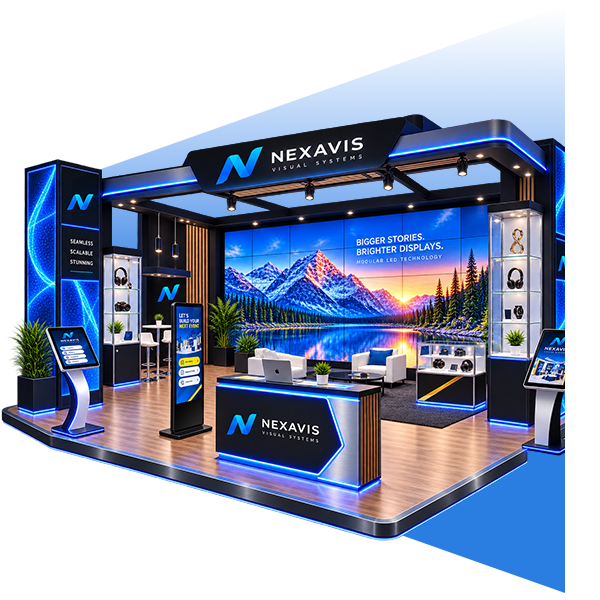
An AI-generated booth image can give you a clear picture of the look you want. It cannot tell you what that exhibit will cost to fabricate, pack, ship, install, and operate at your show. When you request a rental quote, those details matter as much as the design.
At The Tradeshow Network Marketing Group, we can use your inspiration to develop a practical rental exhibit. The starting point is understanding which details create the visual impact you want and which would add costs beyond your budget.
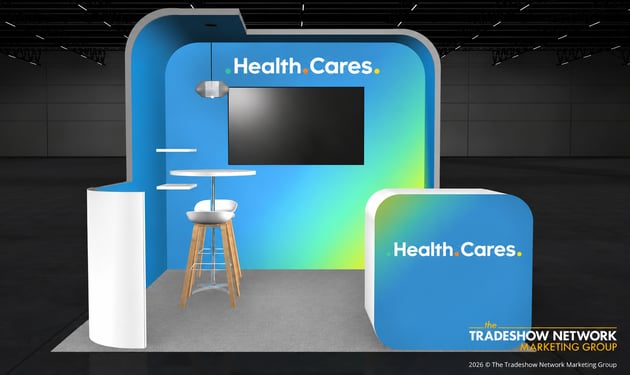
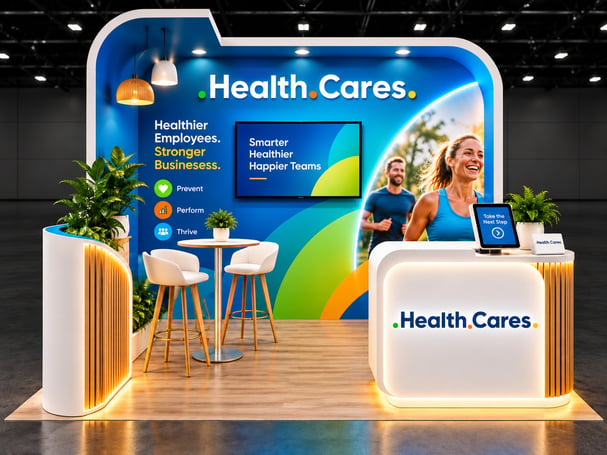
These two images show how a similar exhibit concept can create different expectations about cost. Both feature a suspended rectangular sign, a tall architectural opening, branded walls, a reception counter, screens, and seating. Neither image is a photograph of a completed booth.
The rental rendering uses graphic surfaces and a defined architectural layout. The AI concept adds the appearance of blue illuminated edges around the opening, hanging sign, counter, and floor perimeter, along with recessed overhead lights. Those details deserve separate consideration in a quote.
The question is not whether the AI concept looks appealing. The question is which effects you want to reproduce physically, which can be achieved through artwork, and how those decisions fit your rental budget.
A printed glow effect and a physically illuminated edge require different production approaches. Blue gradients, light trails, and dramatic product imagery can be part of printed artwork. They do not automatically require an electronic display or a solid acrylic wall.
Actual illuminated edges require lighting components, power, and an installation plan. If you want the floor perimeter, counter, architectural opening, and hanging sign to light up as shown in the AI concept, those features need to be evaluated individually.
You cannot identify the construction materials or electrical requirements from the image alone. A surface that appears luminous might be represented with printed graphics, backlighting, or another treatment. Your design team needs to establish which approach you expect before pricing it.
TTNMG uses lightweight graphics on its rental frames to give you flexibility in branding without making every visual detail a custom-built feature. Start by identifying what you like about the AI image: its color, imagery, visibility, or actual lighting.
Our rental exhibits use modular metal frames that pack efficiently into crates, helping control transportation and handling costs. The structure behind the graphics is a practical part of the design, even though you may never notice it in a finished rendering.
Components designed to fit together and pack efficiently help manage the number of crates needed. Packing, shipment dimensions, and weight all belong in the planning conversation. Fewer crates alone do not guarantee a particular freight or material-handling price; the shipment and the show's charging rules still matter.
The Tradeshow Network Marketing Group combines rental structures with lightweight graphics so you can develop a branded exhibit without treating every wall as a custom fabrication project. Your graphics provide the imagery and messaging; the underlying frame system provides the structure.
Your exhibit budget needs to account for the work and services required to deliver the design, not just its appearance. A rental quote should clarify what is included, what is optional, and what requires a separate allowance.
Custom curves, sculpted details, and solid wood or acrylic treatments can introduce additional fabrication work. Those features are not inherently wrong, but they should earn their place in your budget.
The two images here primarily illustrate differences in lighting and finishes, rather than curved construction. The broader lesson still applies: a design tool can add an elaborate feature without showing the labor, material, packing, or installation implications.
Physical lighting adds equipment and power requirements that need to be planned for your specific show. The AI concept's illuminated perimeter and recessed lights should prompt questions about fixtures, wiring, electrical service, and installation access.
Installation and dismantling also belong in the budget. Extra connections, finishing work, or nonstandard components can add tasks on the show floor. The design should be reviewed against the venue's requirements and the available setup schedule.
Shipping gets your exhibit to its destination; drayage, or material handling, covers the show's handling of your freight under its service rules. They are separate budget considerations, and neither is visible in an AI image.
Additional materials and hardware can change shipment weight, volume, and packing requirements. Efficiently crated rental components help manage those variables, but actual charges depend on the shipment and the applicable service terms.
Your written rental proposal should define the package inclusions and identify expenses that need separate confirmation. Do not assume that everything pictured is included or that every service is billed the same way.
Ask about graphics, flooring, furniture, screens, lighting, shipping, installation and dismantling, material handling, electrical service, and overhead rigging where applicable. Confirm which items your exhibit partner provides, which are allowances, and which must be ordered or paid for separately.
A useful rental brief pairs your inspiration image with a booth size, show details, and a budget. That gives your exhibit team a basis for recommending a structure and prioritizing the features you value.
You may decide that a particular lighting feature is worth the additional investment. You may also find that the color palette and printed artwork deliver the look you wanted without reproducing every illuminated edge.
Your AI concept can be a useful starting point for a rental exhibit conversation. Bring the image, explain what appeals to you, and share the budget the design needs to meet.
The Tradeshow Network Marketing Group can help translate that direction into a modular rental exhibit proposal, with attention to graphics, construction, packing, and show requirements. Ask us to review your inspiration and outline the rental options, optional upgrades, and additional expenses before you choose your design.
 Karin Roberts : Thu, Jan 27, 2022
Tips on how you can effectively budget for your next rental booth at any trade show event in Chicago, Las Vegas, or Orlando.
 Karin Roberts : Thu, May 21, 2015
Watch our video of exhibit designs that we saw at the NRA Show - book your custom rental booth so we can start working your design!
 Karin Roberts : Tue, Jan 12, 2021
Designing a safe and inventive trade show exhibit is easy with our help! Let us design the next exhibit booth to meet all your trade show needs.