

5 Strategies the Best Reps Use to Tell Tire Kickers From Real Prospects
You've spent hours prospecting: researching, making warm calls, reaching out after the trade show event via email and on social media - so are they...

1 min read
Karin Roberts
:
Published
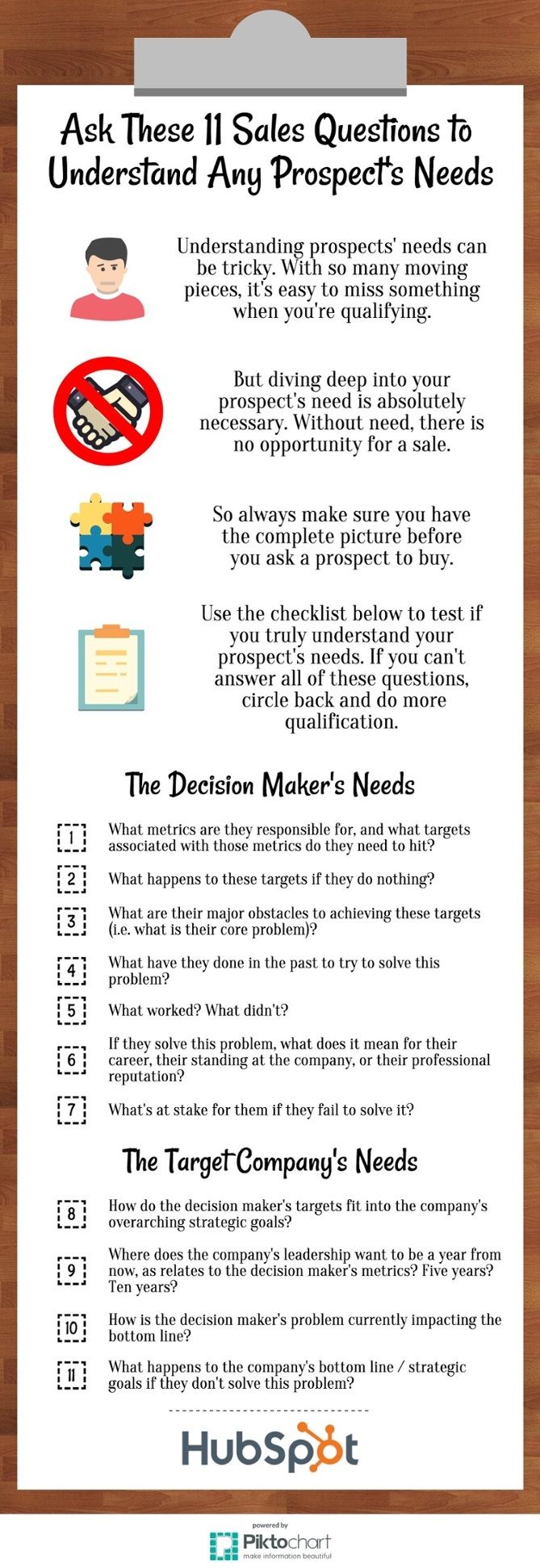
When you’re qualifying a prospect, what’s the most important thing you need to understand? Is it budget? Authority? Timeline? Goals? All these things are certainly important. But the most important information you can get -- and what you should focus your qualification on -- is need. Without need, there is no sale. Your prospect can have all the money in the world, have the final say on all purchasing decisions, and be ready to act now. But if your product doesn’t solve a problem she’s trying to address, your deal is dead in the water. So it’s necessary to gain a deep understanding of your prospect’s need. But what does that look like? At what point can you confidently say you understand a need and begin to formulate a plan to address it? You’ll need to understand need at two levels: what your decision maker or other major stakeholders hope to get out of the purchase, and how those goals fit into company goals on a grander scale.
Use the checklist below to qualify for need at both levels and walk away from any sales call confident that you understand the problem.
You've spent hours prospecting: researching, making warm calls, reaching out after the trade show event via email and on social media - so are they...

Your snazzy new booth needs to draw leads so how do you do it successfully?
It is hard to manage the emotion turmoil that a trade show booth brings to an exhibit manager. In reading this story in the website magazine on Custo...